

Thailand 2028
We are planning two tours: TOUR 1 runs February 1-21, 2028 and starts in Bangkok and finishes in Chang Mai. THIS TOUR has 3 spaces available (8 PEOPLE max)
TOUR 2 runs in reverse from February 23 - March 14, 2028 and starts in Chang Mai and finishes in Bangkok. THIS TOUR is full (8 PEOPLE)
Both tours will run
What sets this tour apart...
We visit the very best locations in the central and northern regions of the country to balance travel times, habitat variety and the fantastic assortment of bird species. Staying true to the guiding mission of the tours, we partner with local guides and support local restaurants and hotels / lodges. Because this trip is offered as close to cost as possible and not run for profit, we are able to pay our guides well and tip the local restaurants and lodges fairly.
We drive from the central region to the north in two days that allows us to see seldom visited areas that have fantastic birding opportunities.
These trips are characterized by a fun and inclusive atmosphere. I only cover my costs, so I want to ensure that we have a good time and see plenty of birds.
Cost ...
The 21 day tour costs $5900 USD based on double occupancy and 8 people The single supplement is $1100 USD.
Based on 6 people the tour price is $6700 USD based on double occupancy.
This is significantly less expensive than all major bird tours thst are offered. Still, we use great local hotels and fantastic local guides.
The cost is based on 8 participants and is all inclusive from day 1 to 21. This does include tips for guides and drivers; tips for boats and lodges, water and drinks ... but I do encourage participants to add to the tips if they wish.
The tour at a glance...
This 21days tour is designed around the very best birding destinations in the central and the north of Thailand. It offers a great selection of striking and sough-after Thailand specials. Travel from the central to the north by a road trip and overnight one night on the way is an excellent idea to add few more birding sites into the program, and ensures an ever increasing number of species into your list. Moreover, we have an opportunity to enjoy more of Thailand landscapes.
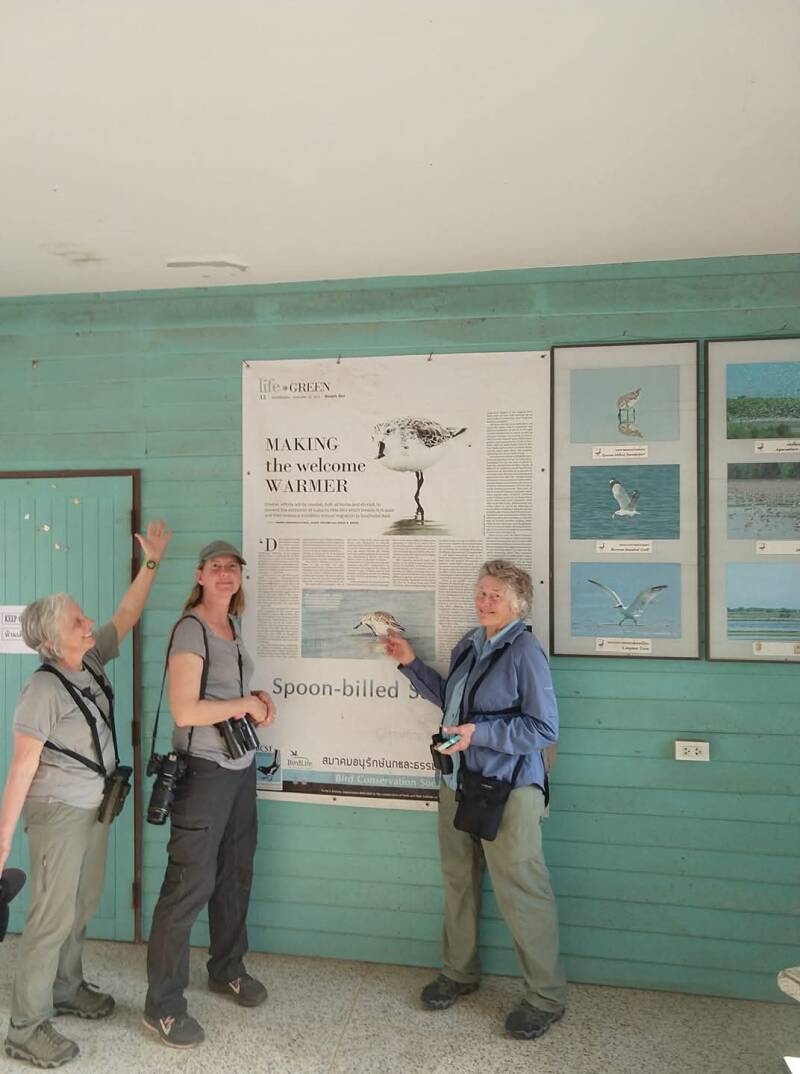
Central Thailand covering the broad alluvial plain of the Chao Phraya River, where the country largest rice production areas occur. There is also a mountain range appears at the northeastern rim of the region, the Phetchabun mountain range which is separated the central plain from the northeastern plateau. On the southwestern rim of the central, there is the Tenasserim mountain range in Phetchaburi Province which form the boarder line between Thailand and Myanmar. Below Bangkok, it encompasses with a shallow bay called “the Inner Gulf of Thailand”, where the intertidal mudflat occurs extensively from the east to the west of the inner gulf and it is the country single most critical habitat for migratory shorebirds and waterbirds.
Two major national parks that we will focus in the central region include Khao Yai and Kaeng Krachan National Park. Other birding sites that we will also explore comprise of Limestone mountain in Saraburi Province, Pak Thale salt-pans, Laem Phak Bia sand spit, rice fields and wetlands in Phetchaburi Province. Khao Yai National Park is the first established national park in Thailand. Khao Yai together with other adjacent national parks and forest reserves were declared as a UNESCO World Heritage Site in 2005, which were called Dong Phayayen-Khao Yai Forest Complex. Khao Yai NP is the most visited park in Thailand as its location is not far from Bangkok and the park contains very good facilities for tourists. It is also well-known for a great place for birds and wildlife watching. Kaeng Krachan National Park is the largest park in the country and declared as a UNESCO World Heritage Site in 2021. It renowned for its high diversity of birds and wildlife, many birders named it “the capital of Thailand birdwatching”. Its location is a conjunction point between the upper and the lower part of the country. The high season for birding in this park extends longer than other parks in Thailand. However, tourist facilities in this park are completely different from Khao Yai NP; it is very remote and the whole area is a very steep mountain and has caught much less attention from tourists. There is only one road that traverses through the park from the entrance to the top peak, a first half of the road is a good paved road but a second half is a rough and steep dirt road. Pak Thale salt-pans is situated along the shoreline of the Inner Gulf of Thailand, it is one of the country largest traditional salt production area. These salt-pans are well-known as the international important site for migratory shorebirds in Southeast Asia, where it is a suitable wintering site for some of critically endangered species such as Spoon-billed Sandpiper and Nordmann’s Greenshank (over 10% of global population of Nordmann’s Greenshank wintering in the inner gulf of Thailand), as well as considerable numbers of many other shorebirds. Laem Phak Bia sand spit located nearby Pak Thale salt-pans, it holds other species of rare shorebirds that are restricted to a sand bar habitat. We must take a boat through mangroves to get to this sand spit, and on the boat we can also connect with more species that inhibit the mangroves too. Rice fields in Phetchaburi Province are also very interesting to explore, and among some of birds that spend their winter in rice paddies is the critically endangered species such as Yellow-breasted Bunting. Rice paddies are apparently a fabulous habitat that holds a high diversity of birds, and hanging around for few hours in this habitat can be very productive afternoon.
Northern Thailand is a mountainous region with many picturesque national parks. It has a cooler climate and this area of the country has extensive pristine pine forests and montane forests occuring at higher elevations. Some mountains with over 2,000 meters peaks create unique habitats for many high altitude species that can not be found in other places in Thailand. Dry-dipterocarp and mixed deciduous forest dominated lower elevation area and foothills below 800 meters. Rice fields and lakes at low land areas are also good habitats for many appealing migrant and resident species. Thereby, northern Thailand offering a great selection of spectacular and sough-after Southeast Asian species, along with a huge array of migrants from the northern hemisphere.
When we are in the north we will focus only on birding destinations in Chiang Mai Province, where many country top birding sites are located not too far apart from each other. The main destinations as following; Doi Inthanon National Park, the highest peak of the country at 2,565 meters above sea level where a unique habitat occurs and home to some of locally endemic birds that restrict to this habitat. The park has an altitudinal gradient of forest types that created diverse habitats for many spectacular species. Doi Ang Khang situated on the border between Thailand and Myanmar. It is a steep mountain with a breathtaking panoramic view. Even though majority of forest areas on Doi Ang Khang have been encroached and converted to agriculture areas, but some remain in healthy condition, as well as acceptable amount of regenerating forests. Thus, it is surely still excellent for birding. Doi San Ju and Doi Lang, they are located on the same mountain ridge right on the border of Thailand and Myanmar. Doi San Ju is on the west side of the mountain ridge and Doi lang is on the east side, but the road that connects these 2 places was blocked by the Thai army for a safety reason. So, getting to birding spots on these places we have to take the road from different side of the ridge in different district. Then, we will explore Doi San Ju for one day and strike out for Doi Lang on another day. Tham Pha Plong Temple, a peaceful and beautiful Buddhist temple situated at the outer perimeter of Doi Chiang Dao, a huge limestone mountain complex and declared as UNESCO Biosphere Reserve. Rice fields in Fang district will be a place for relax and easy birding before sunset on the day that we are exhausted from long travel or a big day birding on the mountain. Many common species yet appealing to see can be found in this habitat.
What to expect ...
Tour Pace and Walking: Easy to moderate pace, undemanding walking on a forest trail, mostly along pave roads and in national parks
Ease of Birding: Easy to moderate. Most species provide good visuals in open conditions but get trickier within forested environments.
Number of Species Expected: 400+
We have an opportunity for night birding in Kaeng Krachan. In Khao Yai we will do a Night Safari with a Ranger too.
We will visit a bat cave at Khao Yai
Photographic Opportunities: Good to excellent. We will visit photography blind in Kaeng Krachan, Doi Inthanon and feeding place in Doi San ju
Expected Climate: The central is cool in the morning on the mountain tops, hot and more humid lower down especially in the afternoon. The north is cold in the morning on the mountain tops, warm and more humid lower down. Rain and mist is possible in both regions.
Guides ...
We will be accompanied by an English speaking Thai bird guide at all times. In addion, we will have a local guide specific to Khao Yai National Park and on the boat trip through the mangroves to the sand spit.
I will act as the second guide. I have birded once before in Thailand for more than a month and spent many months birding in SE and southern Asia.
Cultural connections ...
We are fully emersed in rural Thailand and will experience sights that many tourists don't typically see.
On most trips I endeavor to support a local school or charity and I will work with our giide to select one .. more details coming.
Health & Safety ...
Thailand has an excellent health care system with hospitals and clinics in every small town and large village. However, make sure you have travel insurance that covers you sufficiently as for foreigners it is not free at point of service (although cheap by the standards of most countries).
Obviously I am not a health provider but as far as I know there are no requirements for any vaccinations of any sort for entry. There may be some exception to that regarding yellow fever depending on your age and where you have travelled, so check that. Thailand is a safe country and tropical diseases are not prevalent, malaria is not really an issue and my understanding is that all cases are in the rainy season and the strain of malaria in SE Asia is resistant to medications, apart from, perhaps, the antibiotic doxycycline.
Most Thais are still wearing masks for covid but it is not a legal requirement. More and more people are dispensing with them and my attitude would be wear them if you feel comfortable with them, don’t if you do not want to. I would bring some with you though just in case.
Thailand is really safe, it is highly unlikely that you would be the victim of the type of crime that is prevalent in many societies – mugging, car break-ins and suchlike. However, use your common sense when in tourist areas.
When in Kaeng Krachan National Park there are wild elephants and each year a few people are killed. However, it is always people who are behaving stupidly. Just listen to your guide on this and if he tells you to get into the vehicle, do so.
Be careful when crossing the road. By far the biggest danger in Thailand is the traffic.
Hotels & Food ...
Hotels and lodges will be comfortable with attached western toilets and AC.
Hotel in Bangkok
https://www.guestreservations.com/golden-jade-suvarnabhumi-ladkrabang/booking?utm_source=google&utm_medium=cpc&utm_campaign=990032399&gad_source=1&gad_campaignid=990032399&gbraid=0AAAAADiMQMaJ4sED8_hMSJA5SXLnvbFlj
Sun hotel
https://maps.app.goo.gl/4B8ALK6RH8Qg3x3x8
Baan Maka Nature Lodge
https://maps.app.goo.gl/9cD1rLakUNDQ1ivY7
The hill hotel
https://maps.app.goo.gl/cCQiovaCdHyfkawe6
Mai Hom Resort
https://maps.app.goo.gl/6nkcd1pz99pG4pvf8
Sakulchai Place
https://maps.app.goo.gl/QbdsV2ky9pVE
Tangerine Ville hotel
https://maps.app.goo.gl/uVsHHxeDNa8ZDHcZ8
Touch star Resort
https://maps.app.goo.gl/FtL8ghCcRmWz3xYv6
Travel ...
Tour 1. You will arrive in Bangkok international airport and leave from Chang Mai ( easy to connect to Bangkok
Tour 2. You arrive in Chang Mai and leave from Bangkok
We can easily arrange hotel accommodation close to airport and a transfer service if you arrive early.
Key Thailand Visa Information for U.S. Citizens
Visa Exemption (Tourism): Allows for a 60-day stay without a visa.
Mandatory Digital Arrival Card (TDAC): Starting May 1, 2026, travelers must register via the official TDAC portal before arrival.
Internal travel: We will use a comfortable AC van

Other ... Money and electronics ... clothes
Obviously bring all your birding/photography equipment. Do bring a tripod and /or monopod. In hides and some stakeouts although birds are fairly tame they do get spooked by movement so if you keep bringing your camera up quickly they fly off. Also in some of the hides the light levels can be challenging so having the camera on a tripod is almost essential really.
In the early mornings it can be cold in the mountains in the early morning, evening and night so bring a warm sweatshirt or fleece or something. No need to go over the top with this but do bring something, in some years it can get quite cold although by February things are usually warming up. Make sure whatever you bring is soft in nature and not stiff and scratchy. I had a terrible time once with someone’s coat making a noise every time he moved with birds flying away when he did so.
In the lowlands, particularly while watching the shorebirds, the temperature can be very high with no shade so bring a sunhat and sunscreen.
No special footwear is really required but do bring a chance of shoes in case one gets wet. I would always recommend closed shoes rather than sandals.
Equally I recommend long trousers rather than shorts so that biting insects and scratchy plants do not get you.
Please remember to wear dull colours. In the dark forest this makes a big difference and certainly shy birds will not emerge if you are wearing pale colours in the field. I have had some people wearing pale stone-coloured birding clothing that might be appropriate in some places but certainly not in tropical forests.
I suggest an umbrella..always good for birding in the rain and also for when its hot.
Power: Thailand uses 230v so you may need a voltage converter for older electronics. They use A,B and C plugs. The first 2 sre US style 2 and 3 prongs and the third is European 2 pin. It is best to have a travel adaptor.
Internet: Most hotels will have wifi. Many people choose to supplement this with an international eSim
Laundry: You can get laundry done cheaply at Tangerine Ville Hotel at Fang, and Baan Maka Nature Lodge or from your hotel or resort, where you stay.
Birding resources ...
Top Birds : Oriental Pied Hornbill, Great Hornbill, Wreathed Hornbill, Tickell’s Brown Hornbill, Austen’s Brown Hornbill, Siamese Fireback, Silver Pheasant, Rufous Limestone Babbler, Red-headed Trogon, Orange-headed Trogon, Banded Kingfisher, Long-tailed Broadbill, Silver-breasted Broadbill, Black-and-Red Broadbill, Black-and-Yellow Broadbill, Banded Broadbill, Dusky Broadbill, Greater Flameback, Greater Yellownape, Great Slaty Woodpecker, Greater Racket-tailed Drongo, Crimson Sunbird, Kalij Pheasant, Grey Peacock-pheasant, Green-legged Partridge, Bar-backed Partridge, Ferruginous Partridge, Blue Pitta, Ratchet-tailed Treepie, Spoon-billed Sandpiper, Nordmann’s Greenshank, Asian Dowitcher, Malaysian Plover, White-faced Plover, Chinese Egret, Yellow-breasted Bunting.
Mrs Hume’s Pheasant, Mountain Bamboo Partridge, Spot-breasted Parrotbill, Himalayan Cutia, Scarlet-faced Liocichla, Doi Inthanon Sunbird, Gould’s Sunbird, Ashy-throated Warbler, Rufous-throated Partridge, Giant Nuthatch, Crested Finchbill, Rusty-cheeked Scimitar-babbler, Annam Limestone Babbler, Rufous-bellied Niltava, Silver-eared Mesia, Yellow-bellied Flowerpecker, Slaty-bellied Tesia, Chestnut-headed Tesia, Pygmy Cupwing, White-capped Water-redstart, White-crowned Forktail, Slaty-backed Forktail, Collared Falconet, White-bellied Redstart, Siberian Rubythroat, Black-throated Bush Tit, Hodgeson’s Frogmouth can be possible in late March and April, Green Cochoa and Purple Cochoa are easier to find in June-August.
Other Wildlife: Wild elephant, Sambar Deer, Barking Deer, Mouse Deer, White-handed Gibbon, Pig-tailed Macaque, Stump-tailed Macaque, Spectacled Langur, Dusky Langur, Black Giant Squirrel, Variable Squirrel, Burmese Striped Squirrel, Water Monitor Lizard, Land Monitor Lizard, Yellow-throated Marten, Malayan Sun Bear, Gaur, Leopard
Itinerary ...
Day 1: Kok Kham Salt-pans and rice fields in Phetchaburi Province
Pick up from the hotel in Bangkok at early morning around 5.30 am. Travel to Kok Kham Salt-pans in Samut Sakorn Province, searching for our main target here, a critically endangered species Spoon-billed Sandpiper. Other shorebirds and waterbirds we can see here include Black-tailed Godwit, Great Knot, Red Knot, Curlew Sandpiper, Broad-billed Sandpiper, Marsh Sandpiper, Greater Sand Plover, Lesser Sand Plover, Red-necked Stint, Common Greenshank, Common Redshank, Black-winged Stilt, Grey Plover, Pacific Golden Plover, Brown-headed Gull, Whiskered Tern, Common Tern, Little Tern, Little Cormorant, Indian Cormorant, Painted Stork, Grey Heron, Great Egret, Intermediate Egret, Little Egret and more.
After check in at the hotel, around 4.00 pm. we will head off to the rice field. Spend 2 hours in the rice paddies we can connect with Yellow-breasted Bunting (Critically Endangered Species), Baya Weaver, Asian Golden Weaver, Amur Stonechat, Grey Wagtail, Pied Fantail, Greater Coucal, Asian Koel, Oriental Reed Warbler, Freckle-breasted Woodpecker, Asian Pied Starling, Black-collared Starling, White-breasted Kingfisher, Zebra Dove, Spotted Dove, Red-turtle Dove, Asian Palm Swift, Germain’s Swiftlet, Black Drongo, Brown Shrike, Plain Prinia, Yellow-bellied Prinia, Little Green Bee-eater, Blue-tailed Bee-eater, Streak-eared Bulbul, Scaly-brested Munia, White-rumped Munia, and Plain-backed Sparrow.
Meals: B / L / D
Overnight: Sun Hotel
Day 2: Pak Thale Salt-pans and Laem Pak Bia Sand Spit
After breakfast at the hotel, strike out for Pak Thale salt-pans, the country best and the most well-known shorebirds habitat. This morning can be very productive for many shorebirds and waterbirds include Nordmann’s Greenshank, Spoon-billed Sandpiper, Asian Dowitcher, Eurasian Curlew, Eurasian Whimbrel, Bar-tailed Godwit, Black-tailed Godwit, Great Knot, Red Knot, Curlew Sandpiper, Broad-billed Sandpiper, Terek Sandpiper, Marsh Sandpiper, Greater Sand Plover, Lesser Sand Plover, Red-necked Stint, Common Greenshank, Common Redshank, Spotted Redshank, Black-winged Stilt, Grey Plover, Pacific Golden Plover, Ruddy Turnstone, Brown-headed Gull, Caspian Tern, Whiskered Tern, Common Tern, Little Tern, Little Cormorant, Indian Cormorant, Painted Stork, Grey Heron, Great Egret, Intermediate Egret, Little Egret and so on.
After lunch, we will take a boat through mangrove to Laem Phak Bia sand spit to find special shorebirds that restricted to this tiny sand spit, the increasingly scarce Malaysian Plover and the recently elevated White-faced Plover. Other species in the mangroves and on the sand spit such as Collared Kingfisher, Black-capped Kingfisher, Brahminy Kite, Chinese Egret (a rare waterbird), Javan Pond Heron, Striated Heron, Sanderling and Lesser Crested Tern. More species that we might come across on the way from one spot to another such as Wood Sandpiper, Common Sandpiper, Long-toed Stint, Pied Avocet, Asian Openbill, Spotted Dove, Zebra Dove, Red Turtle Dove, Little Green Bee-eater, Blue-tailed Bee-eater, Black Drongo and Oriental Magpie Robin. Late afternoon travel to our resort tonight, Baan Maka Nature Lodge.
Meals: B / L / D
Overnight: Baan Maka Nature Lodge
Day 3: Kaeng Krachan National Park
Leave the lodge early morning around 5.30 am. with a packed breakfast to strike out for one of the country best birding site. We will ride 4WD truck straight up to the top peak of the park at km.30, Panoenthung Campground. The highlight on this peak is a Ratchet-tailed Treepie, a locally endemic to only this peak, you cannot find this bird in other place in Thailand. Stroll around the peak and down to km.27 might stand a chance to see at least one of them. Other birds that we can connect with around this area include Great Hornbill, Collared Babbler, White-browed Scimitar-babbler, Great Barbet, Blue-throated Barbet, Greater Green Leafbird, Banded Kingfisher, Lesser Racket-tailed Drongo, Hair-crested Drongo, Grey Treepie, Red-headed Trogon, Flavescent Bulbul, Black-crested Bulbul, Mountain Bulbul, White-browed Shrike-babbler, Verditer Flycatcher, Dark-sided Flycatcher, Rufous-browed Flycatcher, Black-winged Cuckoo-shrike, Long-tailed Broadbill, Orange-bellied Flowerpecker, Streaked Spiderhunter, Rufous-fronted Babbler, Yellow-bellied Babbler, White-rumped Shama and many more.
Meals : B / L / D
Overnight: Baan Maka Nature Lodge
Day 4: Kaeng Krachan NP
After light breakfast at the lodge head back to the park again, but today we will explore the low land section of the park. Birding along side the road can be very productive for Oriental Pied Hornbill, Great Hornbill, Tickell’s Brown Hornbill, Crested Serpent Eagle, Black-thighed Falconet, Greater Flameback, Greater Yellownape, Great Slaty Woodpecker, Greater Racket-tailed Drongo, Bronzed Drongo, Ashy Drongo, Asian Barred Owlet, Dollarbird, Indochinese Roller, Sultan Tit, Black-and-Red Broadbill, Black-and-Yellow Broadbill, Banded Broadbill, Silver-breasted Broadbill, Orange-headed Trogon, Golden-crested Myna, Hill Myna, Black-crested Bulbul, Black-headed Bulbul, Stripe-throated Bulbul, Ochraceous Bulbul, Vernal Hanging-parrot, Blue-winged Leafbird, Great Iora, Blue-eared Barbet, Green-eared Barbet, Coppersmith Barbet, Blue-bearded Bee-eater, Chestnut-headed Bee-eater, Asian Fairy Bluebird, Common Flameback, Crimson Sunbird, Ruby-cheeked Sunbird and many more.
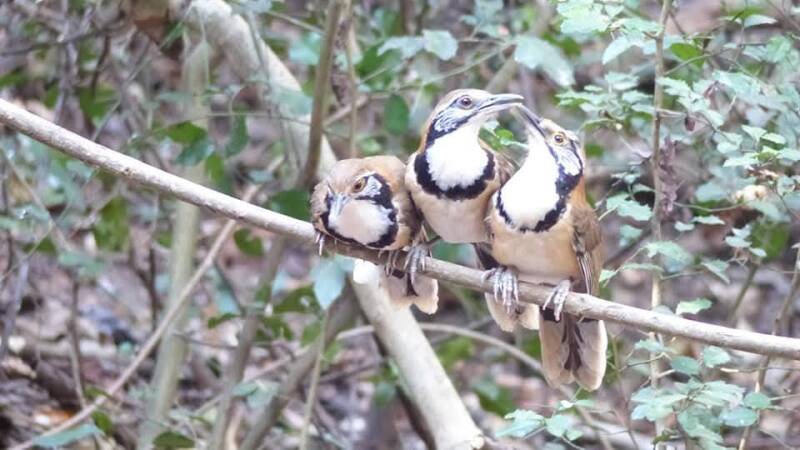
After lunch, we will spend our afternoon in a bird hide outside the park. Birds that can be seen in the hideout include Green-legged Partridge, Bar-backed Partridge, Ferruginous Partridge, Grey Peacock-pheasant, Blue Pitta, White-crested Laughingthrush, Lesser Necklaced Laughingthrush, Greater Necklaced Laughingthrush, Emerald Dove, Racket-tailed Treepie, Siberian Blue Robin, Puff-throated Babbler, Brown-cheeked Fulvetta, Black-naped Monarch, Hill Blue Flycatcher, Indochinese Blue Flycatcher, Black-crested Bulbul, Black-headed Bulbul, Stripe-throated Bulbul and so on.
Meals: B / L / D
Overnight: Baan Maka Nature Lodge/or Boat House
Day 5: Kaeng Krachan NP to Khao Yai National Park via Bangkok
Head back to the low land section in Kaeng Krachan NP again, spend this morning hunting for more species that we still miss.
Get back to the lodge for lunch, then hit the road again for long travel to Khao Yai National Park.
Meals: B / L / D
Overnight: The Hill
Day 6: Khao Yai National Park
This morning we will heading to the top peak of the park and search for the top of the most wanted list of Khao Yai, the elegant Silver Pheasant and the Thai national bird Siamese Fireback. There is a well maintain board walk near the top peak that we can take a short walk and then we will birding down along the road from the higher elevation to the lower areas. Today can be very productive for Red-headed Trogon, Orange-breasted Trogon, Banded Kingfisher, Common Green Magpie, Oriental Pied Hornbill, Great Hornbill, Blue-bearded Bee-eater, Long-tailed Broadbill, Silver-breasted Broadbill, Black Eagle, Red Junglefowl, Green-billed Malkoha, Hill Blue Flycatcher, Mountain Bulbul, Ashy Bulbul, Black-crested Bulbul, Puff-throated Bulbul, Grey-eyed Bulbul, Black-headed Bulbul, Common Iora, White-browed Scimitar-babbler, White-crested Laughingthrush, Black-throated Laughingthrush, Heart-spotted Woodpecker, Blue Whistling-thrush, Orange-headed Thrush, Thick-billed Green Pigeon, Mountain Imperial Pigeon, Brown-backed Needletail, Hair-crested Drongo, Greater Racket-tailed Drongo, Ashy Drongo, Black-winged Cuckoo-shrike, Scarlet Minivet, Ashy Minivet, Red-wattled Lapwing, Ashy Wood-swallow, Indochinese Roller, Crested Serpent Eagle, Grey Wagtail, Blue Rock Thrush, White-rumped Shama, Verditer Flycatcher, Taiga Flycatcher, Grey-headed Canary Flycatcher, Brown Shrike, Olive-backed Sunbird, Spotted Dove, Zebra Dove and many more.
Meals: B / L / D
Overnight: The Hill
Day 7: Khao Yai National Park
Today we will visit more birding spots in the park such as camp sites and a waterfall. We will search for those spicies that we still miss from yesterday such as Wreathed Hornbill, Austen’s Brown Hornbill, Sultan Tit, Green-eared Barbet, Blue-throated Barbet, Blue-eared Barbet, Coppersmith Barbet, Chestnut-headed Bee-eater, Golden-fronted Leafbird, Blue-winged Leafbird, Sulphur-breasted Warbler, Pin-striped Tit Babbler, Yellow-vented Flowerpecker, Cambodian Flowerpecker, Black-naped Oriole, Greater Flameback, Asian Fairy Bluebird, Paddyfield Pipit, Olive-backed Pipit, Vernal Hanging-parrot, Red-breasted Parakeet, Bar-winged Flycatcher-shrike and many more.
Optional: In the afternoon, in case of we still missing some of our main target species and not productive enough, we will travel to the other forest reserve near Khao Yai NP. This place is a pristine dry-dipterocarp forest where we might see more species inhabit very dry habitat.
Meals: B / L / D
Overnight: The Hill
Day 8: Limestone Mountain in Saraburi Province to Nakorn Sawan Province
Leave the hotel for limestone mountain in Saraburi Province, search for the country endemic species, Rufous Limestone Babbler. Other birds also can be found here such as White-rumped Shama, Coppersmith Barbet, Ashy Drongo, Black Drongo, Taiga Flycatcher, Asian Brown Flycatcher and so on. Then, travel to Nakorn Sawan Province. After check in at the hotel, around 4.30 pm. we will visit a small wetland not far from the hotel where we might connect with White-breasted Waterhen, Little Pratincole, Asian Openbill, Yellow Bittern, Cinnamon Bittern, Chinese Pond Heron, Purple Heron, Grey Heron, Black-winged Stilt, Little Cormorant, Indian Cormorant, Little Ringed Plover, Chestnut-capped Babbler, Plain Prinia, Scaly-breasted Munia, White-rumped Munia, Chestnut Munia, Grey Wagtail, Streak-eared Bulbul, Yellow-vented Bulbul, Malaysian Pied Fantail, White-breasted Kingfisher, Taiga Flycatcher, Asian Brown Flycatcher, Hainan Blue Flycatcher and more.
Meals: B / L / D
Overnight: Mai Hom Resort Hotel
Day 9: Bung Boraphet Lake and travel to Chiang Mai Province
After breakfast at the hotel, around 6.30 am. leave for Bung Boraphet Lake. We will cruise around the lake by local boat for few hours. This morning in the lake can be productive for Lesser Whistling Duck, Cotton Pygmy Goose, Little Grebe, Glossy Ibis, Black-headed Ibis, Oriental Darter, Striated Grassbird, Pheasant-tailed Jacana, Bronze-winged Jacana, Grey-headed Swamphen, Common Moorhen, Common Coot, White-browed Crake, White-breasted Waterhen, Common Snipe, Pin-tailed Snipe, Little Cormorant, Indian Cormorant, Great Egret, Intermediate Egret, Little Egret, Cattle Egret, Grey Heron, Purple Heron, Black-crowned Night-heron, Chinese Pond Heron, Black-winged Stilt, Red-wattled Lapwing, Pacific Golden Plover, White-breasted Kingfisher, Black-capped Kingfisher, Common Kingfisher, Plaintive Cuckoo, Asian Koel, Greater Coucal, Asian Golden Weaver, Baya Weaver, Amur Stonechat, Barn Swallow, Red-rumped Swallow, Eastern Marsh Harrier, Pied Harrier, and more. Other ducks that have been seen in the lake, some year they are present but some year they are not, such as Common Pochard, Baer’s Pochard, Garganey, Northern Shoveler, Indian Spot-billed Duck, Northern Pintail, Ruddy Shelduck etc.
After the boat trip around the lake, we will spend about an hour along the path near the pier where it is a reed habitat occur. Birds that we might find here include Chestnut-capped Babbler, Yellow-bellied Prinia, Oriental Reed-warbler, Thick-billed Reed-warbler, Black-browed Reed-warbler, Lanceolated Warbler and so on.
Drive to Mae Wong NP.in Kamphaengphet Province, after lunch, it will be a long ride.
Meals: B / L / D
Overnight: Rattana Bordee Resort.
Day 10-11: Mae Wong NP./Kamphaengphet Province.
05:30 Breakfast/Transfer to Mae Wong National Park. You’ll see Grey Peacock Pheasant, Rufous-throated Partridge, Rusty-naped Pitta, Burmese Yuhina, White-necked Laughingthrush, Red-billed Scimitar Babbler, Coral-billed Scimitar Babbler, Rufous-necked Hornbill, Lesser Yellownape, Silver-eared Mesia, Spot-necked Babbler, Eyebrowed Wren Babbler, Crested Kingfisher, and many other Birds.
12:00 Lunch
15:00 Continue to afternoon Bird Watching Program.
17:00 Return back to Resort.
18:30 Dinner.
Day 11: Late morning drive to Chiang Mai Province/Lunch on the way/Check into Sakulchai Place
-Meals: B/L/D
-Overnight at: Rattana Bordee Resort.
Day 12: Chiang Mai-Doi Ang Khang.
05:30 Leaving Chiang Mai and drive around 1.5 hours to Chiang Dao for some birding around Pha Plong Temple. It is a very scenic spot and a good place to see a variety of commoner forest birds such as Black-hooded Oriole, Radde’s Warbler, Little Spiderhunter, Asian Fairy Bluebird, Black-headed Bulbul, Buff-breasted Babbler, Blue-winged Leafbird, Blue-eared Barbet, Velvet-fronted Nuthatch, White-rumped Shama. Some of the scarcer birds that there is a chance of include Pin-tailed Green Pigeon, Purple-naped Sunbird, Streaked Wren Babbler. Quite a lot of possibilities but this is just a good location to see some birds in the morning before heading further on to the mountains.
Continue the journey to Doi Ang Khang. A visit to this mountain is always nice for the scenery as well as the birds. Pine forest is a good place to see Blyth’s Shrike Babbler, Japanese Tit, Giant Nuthatch, Maroon Oriole, Slender-billed Oriole, Chestnut-vented Nuthatch, Chestnut-bellied Rock Thrush and Stripe-breasted Woodpecker. This is the best location to get good views of Crested Finchbill and Brown-breasted Bulbul as well as Silver-eared Mesia.
The Royal Project Gardens are very beautiful and contain some nice birds too, such as Black-throated Sunbird, Mrs Gould’s Sunbird, Streaked Spiderhunter and Orange-bellied Leafbird. This can also be the best place to see Black-breasted Thrush and if it is a cold year then other thrushes such as Scaly Thrush are possible. White-tailed Robin, Rufous-bellied Niltava and White-headed Bulbul are also birds to look for.
An army camp right on the Thai/Myanmar border is an interesting place to visit and it usually holds Daurian Redstart and Yellow-streaked Warbler. Sometimes a few surprises too.
12:00 Lunch.
16:00 Transfer to Fang District/Check into Tangerine Ville Hotel.
18:30 Dinner.
-Meals: B/L/D
-Overnight at: Tangerine Ville Hotel.
Day 13: Doi Sanju or Doi Lang West.
-At Doi Sanju or Doi Lang West, targeting, in the early morning, a stakeout for Mrs Hume’s Pheasant. Usually pretty reliable at this time of year. Also, Mountain Bamboo Partridge, Japanese Tit, Rusty-cheeked Scimitar Babbler, Ultramarine Flycatcher and Olive-backed Pipit. This area is good for Giant Nuthatch too. Spend all day on Doi Sanju or Doi Lang West. This is an excellent area, target species include Hume’s Treecreeper, Himalayan Cutia, Grey-headed Parrotbill, White-browed Scimitar Babbler, Chinese Leaf Warbler, Buff-throated Warbler, Lesser Yellownape, Sapphire Flycatcher, Pale Blue Flycatcher, Slaty-backed Flycatcher, Grey-chinned Minivet, Rufous-backed Sibia and many more.
12:00 Lunch.
17:00 Return back to your hotel.
18:30 Dinner.
-Meals: B/L/D
-Overnight at: Tangerine Ville Hotel.
Day 14: Doi Lang East.
Morning and early afternoon on Doi Lang East. An excellent spot for Scarlet-faced Liochichla, Himalayan Bluetail, Large Niltava, Spectacled Barwing, Buff-barred Warbler, Davison’s Leaf Warbler, Whiskered Yuhina, Chestnut-crowned Warbler, Oriental Turtle Dove, Orange-bellied Leafbird, Black-eared Shrike Babbler, Yellow-bellied Fantail and lots more.
After a packed lunch head back down the mountain to Thaton rice fields for late afternoon. Grey-headed Lapwing, Citrine Wagtail, Yellow-breasted Bunting, Pied Harrier, Eastern Marsh Harrier, Yellow-eyed Babbler, Striated Grassbird and many more.
12:00 Lunch.
17:00 Return back to your hotel.
18:30 Dinner.
-Meals: B/L/D
-Overnight at: Tangerine Ville Hotel.
Day 15: Today, revisit either Doi Ang Khang or Doi Lang West. Depending on climatic conditions often one of these two has high abundance of birds while the other is a little trickier birding. This gives the opportunity to revisit the best one and/or go in search of any of the key targets not yet seen. Many of the species require time so it is always good to have extra time. This also allows you not to be pressured into dawn to duck birding every single day should you wish to have a shorter day here and there. It also allows for a bit of flexibility and especially if you take photos, that little bit more time to get some nice shots.
12:00 Lunch.
16:00 Return back to your hotel.
18:30 Dinner.
-Meals: B/L/D
-Overnight at: Tangerine Ville Hotel.
Day 16: Fang Hot Springs.
06:00 Breakfast/Short drive to Fang Hot Springs.
-A morning visit to the picturesque Fang Hot Springs. This spot is excellent for getting close views of Spot-winged Grosbeak. Asian Barred Owlet can usually be seen here along with Eurasian (White-faced) Jay, Rosy Minivet, Lineated Barbet, Blue-bearded Bee-eater, Shikra, Golden-fronted Leafbird, Striated Swallow and many others. If there are fruiting trees around then Pin-tailed Green Pigeon and/or Little Cuckoo Dove might be seen.
By mid-morning start driving south towards Doi Inthanon, stopping for lunch along the way. This is quite a long drive, around 5-5.5 hours. We aim to arrive at the accommodation at Doi Inthanon in time to visit an area where Blossom-headed Parakeets gather for pre-roost.
12:00 Lunch.
16:00 Check into Touch Star Resort.
18:30 Dinner.
-Meals: B/L/D
-Overnight at: Touch Star Resort.
Day 17-21: Doi Inthanon NP.
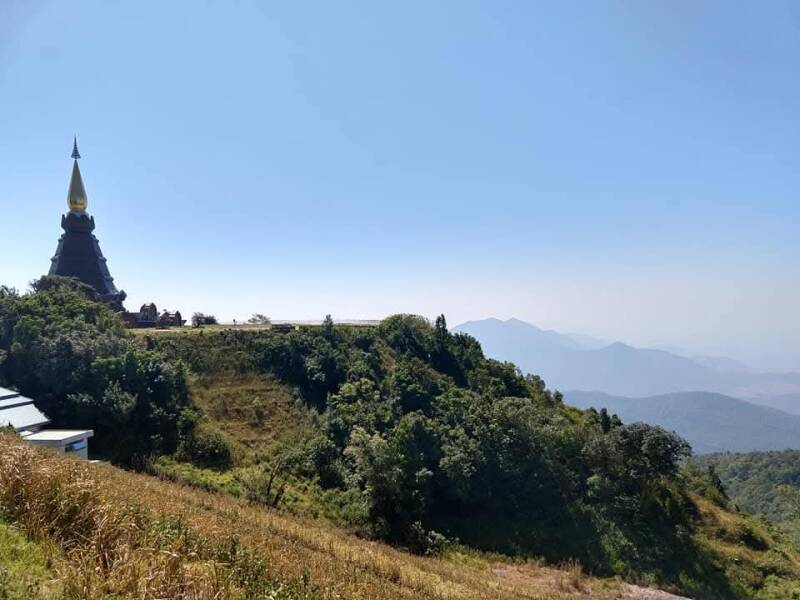
-We’ll spend 5 full days on Doi Inthanon. Lots to look for here and a variety of high altitude habitats. Key birds include Speckled Woodpigeon, Chestnut-tailed Minla, White-crowned Forktail, Slaty-backed Forktail, Dark-sided Thrush, Green-tailed Sunbird, Slaty-bellied Tesia, Himalayan Shortwing, Pygmy Cupwing, Snowy-browed Flycatcher, Little Pied Flycatcher, Hume’s Treecreeper, Rufous-throated Partridge, Ashy Woodpigeon, Black-headed Woodpecker, Clicking Shrike Babbler, Yellow-cheeked Tit, Blyth’s Leaf Warbler, Plumbeous Redstart, White-capped Water Redstart, Short-billed Minivet, Large Niltava, Small Niltava, Collared Falconet, White-rumped Falconet.
Rarer birds which you might have a chance of seeing include Long-tailed Broadbill, Green Cochoa, Black-throated Parrotbill, Rusty-naped Pitta, White-necked Laughingthrush.
Day 17: Doi Inthanon National Park.
06:00 Breakfast/Drive to 2nd Check Point/Start Bird Watching from the second checkpoint where typical species include Black-backed Sibia, Spectacled Barwing, Grey-throated Babbler, Scarlet Minivet, and many other birds. Next to the summit of Doi Inthanon where exciting species such as the Pygmy Wren Babbler, White-browed Shortwing, Snowy-browed Flycatcher, Yellow-browed Tit, Green-tailed Sunbird, Ashy-throated Warbler, Chestnut-tailed Minla, Rufous-winged Fulvetta, Rufous-throated Partridge, Dark-sided Thrush, and many more.
12:00 Lunch at Mr.Daeng Birding Center.
14:00 Continue to afternoon Bird Watching program at Huay Sai Luang Waterfall.
17:00 Return back to our Resort/Dinner.
-Meals: B/L/D
-Overnight at: Touch Star Resort.
Day 18: Doi Inthanon National Park.
06:00 Breakfast/Drive to KM.34.5/to explore Large Niltava, Small Niltava, Streak-breasted Woodpecker, Chickling’s Shrike-Babbler, White-browned Shrike-Babbler, Rufous-backed Sibia, Slaty-bellied Tesia and many more.
12:00 Lunch at Mr.Deang Birding Centre.
14:00 Start the afternoon Bird Watching program, Revisit KM.34.5, You'll see Chestnut-crowned Warbler, Green Cochoa, Slaty-bellied Tesia, Mountain Tailorbird, Chestnut-vented Nuthatch, Brown-throated Treecreeper and many more.
17:00 Return back to our Resort/Dinner.
-Meals: B/L/D
-Overnight at: Touch Star Resort.
Day 19: Doi Inthanon National Park.
06:00 Breakfast/Drive to Rang Bon Doi Bird Hides, You”ll see Rufous-bellied Niltava, Brown-cheeked Fulvetta, Grey-throated Babbler, Buff-breasted Babbler, White-crowned Forktail, and many more.
12:00 Lunch at Mr.Deang Birding Centre.
14:00 Start the afternoon Bird Watching program for,White-capped Water redstart, Slaty-backed Forktail, Plumbeouss Redstart, and many more.
17:00 Return back to our Resort/Dinner.
-Meals: B/L/D
-Overnight at: Touch Star Resort.
Day 20: Doi Inthanon National Park.
06:00 Breakfast/Drive to Pha Tang Palace,You”ll see Grey-breasted Parrotbill, Silver-eared Mesia, Wedge-tailed Green Pigeon, Small Niltava, Large Hawk Cuckoo, Lesser Racket Drongo and many more.
12:00 Lunch at Mr.Deang Birding Centre.
14:00 Start the afternoon Bird Watching program for, White-capped Water redstart, Slaty-backed Forktail, Plumbeouss Redstart, and many more.
17:00 Return back to our Resort/Dinner.
-Meals: B/L/D
-Overnight at: Touch Star Resort.
Day 21: Doi Inthanon National Park.
06:00 Breakfast Check out/Drive to KM.13/You'll see White-rumped Falconet, Collared Falconet, Black-headed Woodpecker, Asian Barred Owlet, Red-billed Blue Magpie, Maroon Oriole, Grey-chined Minivet,White-crowned Forktail and many more.
12:00 Lunch at Mr.Deang Birding Centre.
13:00 Start the afternoon program.
16:00 Drive to Chiang Mai Air-port or your hotel in Chiang Mai/End of the Trips.
-Meals: B/L
Create Your Own Website With Webador