

South India and Nepal's Terai
January 7 to 23, 2028 with possible short extensions. It is advised to arrive at least one day early to recover from the long flight. We can easy arrange the extra night (s). Kochi is a fantastic old city and we can easily arrange an extra day of birding on the coast with Asian shorebirds.
What sets this tour apart
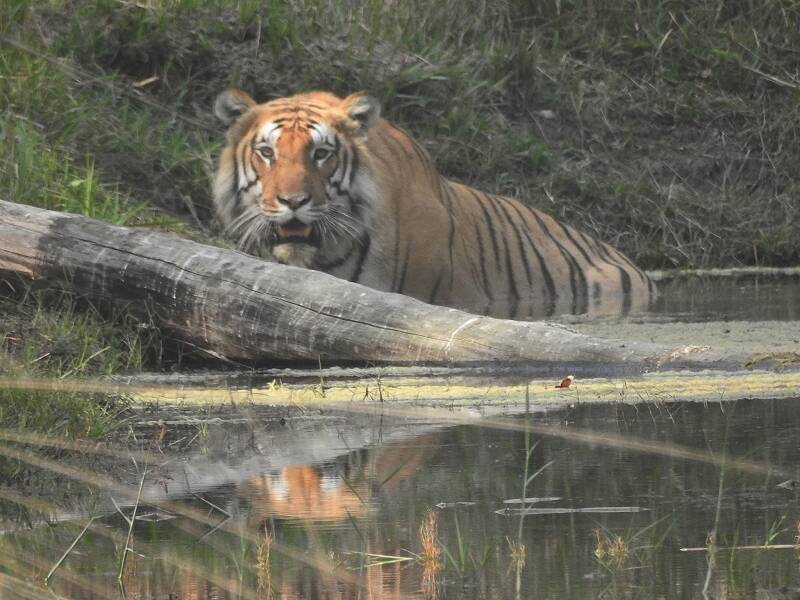
We visit two very unique areas of the Indian Subcontinent; the Western Ghats of South India with its endemic birds, relaxed lifestyles and colorful temples; and to the north, the Himalayan foothills of the Neapl terrai with its huge bird lists, tigers and Rhinos and elephants, and Kathmandu and its colorful markets.
This tour is a partnership with Alyssa DeRubeis of Eagle-Eye tours. While the cost is significantly less than the major tour companies, we have fantastic logistical support which ensures a seemless trip in a fun and relaxed environment where we see just as many, if not more species.
Cost
The 17 day tour is all inclusive from pickup in Kochi to drop off in Kathmandu. It includes an internal flight from Coimbatore to Katmandu and tips for local guides, safaris and hotels.
$4,500 based on shared double occupancy and a single supplement of $950, if rooming alone
This price is based on 8 participants and two western guides (Steve and Alyssa). If foreign politics change the exchange rate or the jet fuel prices, then tour price may change very slightly.
What to expect
Relaxed birding is appropriate for all levels of birding experience from the newbies to experienced. While experienced birders will enjoy the endemic and unique birds found in these regions, accompaning non birders that appreciate wildlife and travel will fit right in too. What is super nice is that the birding is relatively easy with mostly open habitats. Expect short hikes on easy trails … Typically breakfast about 6am, on the road by 06.45, but occasionally earlier to beat the heat ... and bird until lunch. Lunch is in restaurants for an hour or so and then bird in the afternoon ... In the South of India we typically rest up over luch for 2-3 hours as bird activity is much reduced. However, for those hard core birders, we are often staying in a great birding spot so its possible to get extra birding in. Depending on location, but most days we will be back by 6pm. Because there are two guides we can easily accommodate a slower pace and those who wish to spend more time taking photos. Also, expect great food. You may need to go on a diet before the trip.
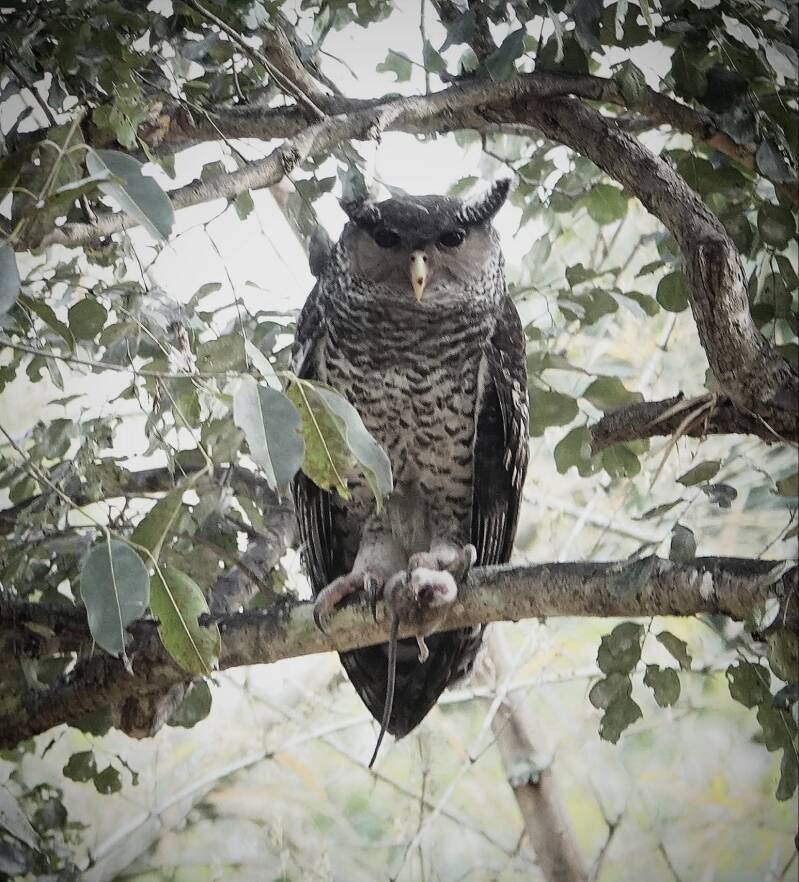
We will go out in the evening to look for Owls and nightjars
There is an internal flight from Coimbatore to Katmandu via Delhi that we will take, and you will be accompanied at all times to help navigate the airport systems.
In the remote areas you will come face to face with the "real India". People will be very friendly and often want photos taken with you. Expect mountain roads with twists and turns close to Katmandu. In Nepal, there is a lot of construction but typically the roads are in a worst state than in India. We will be covering a lot of distance here, but the scenery is majestic and we break up the travel with birding and cultural stops.
There is a safari in chitwan National Park in open topped vehicles. A short dug out cannoe trip is required to enter the park.
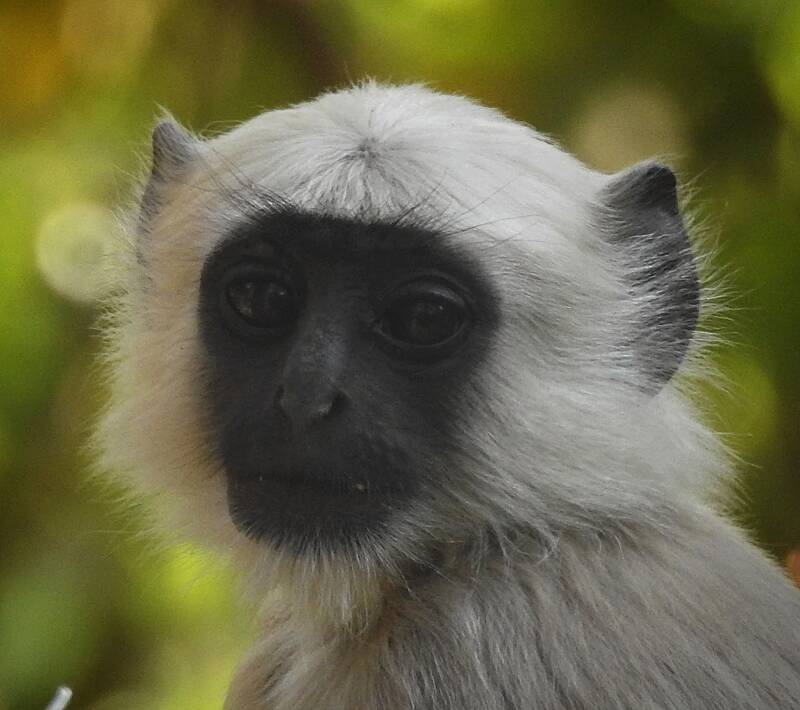
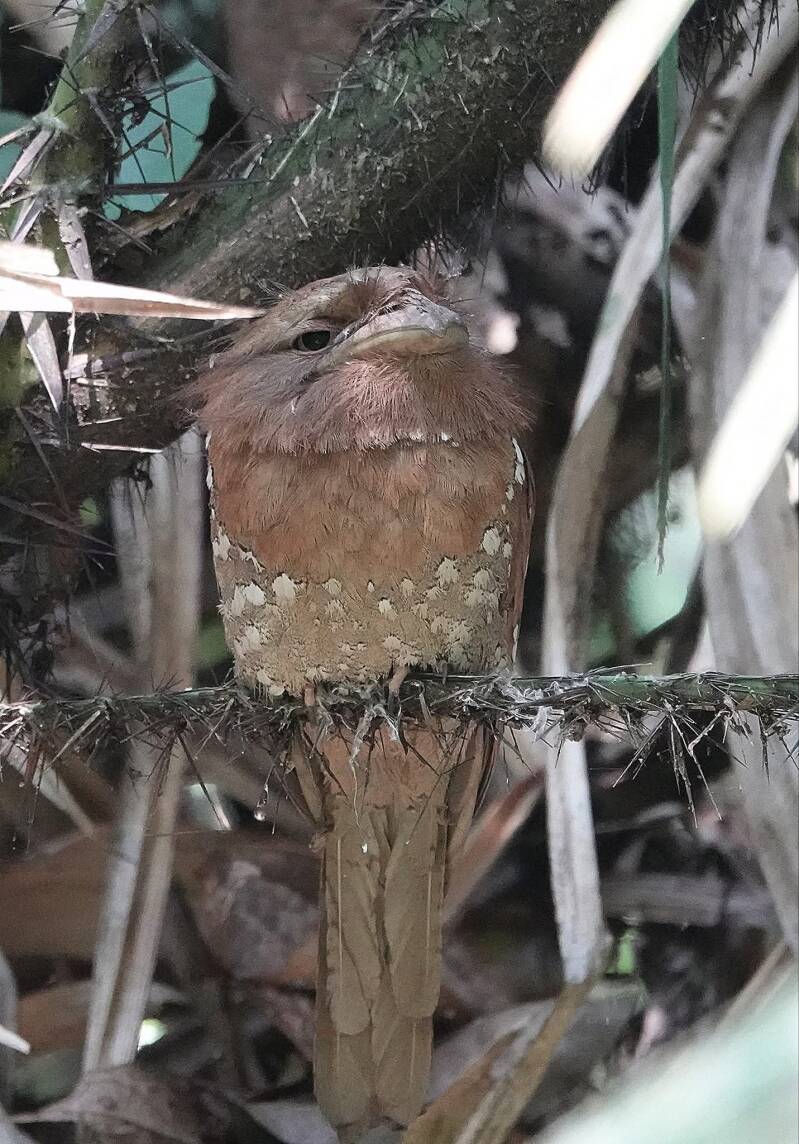
Many of the birds in Southern India are either endemic to the Westrtn Ghats or the Indian Subcontinent. In Nepal we will look for the endemic babbler as well as the iconic Ibisbill.
The guides
We will have two local guides who are great birders and are fluent in English. Ajo is our Southern India guide who lives in Thakkeddad. Dheraj is our Napalise guide. He has worked for many years in local conservation initiatives, especially with endangered raptors.
I will be joined by Alyssa DeRubeis who has led several bird trips with Eagle-Eye tours and has travelled with me to NE India. It is always nice to have additional guides to help spot and point out the birds.
The hardest working members of our trip are the drivers who keep us safe and follow our demanding schedule.
In Tamil Nadu we will be accompanied by a tribal member who helps us find the local birds and Dhol (wild dogs). On safari in Chirwan we will have local guides who are detailed local knowledge on the big animals such as tigers and Owl roosting locations.
Cultural Connections
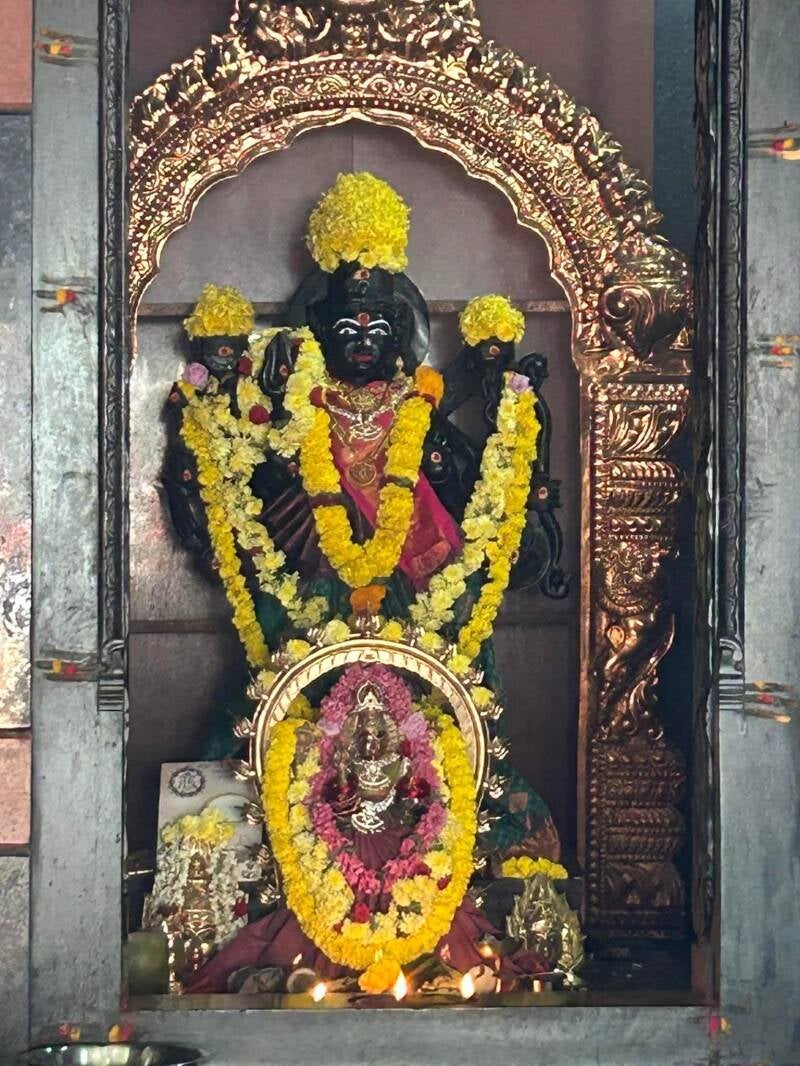
Each area we visit has a very different culture, base religion, language and food. Although we will be birding most of the time, we can arrange excursions if group members want a break. Its easy to visit roadside temples, markets and we will always eat local fashion.
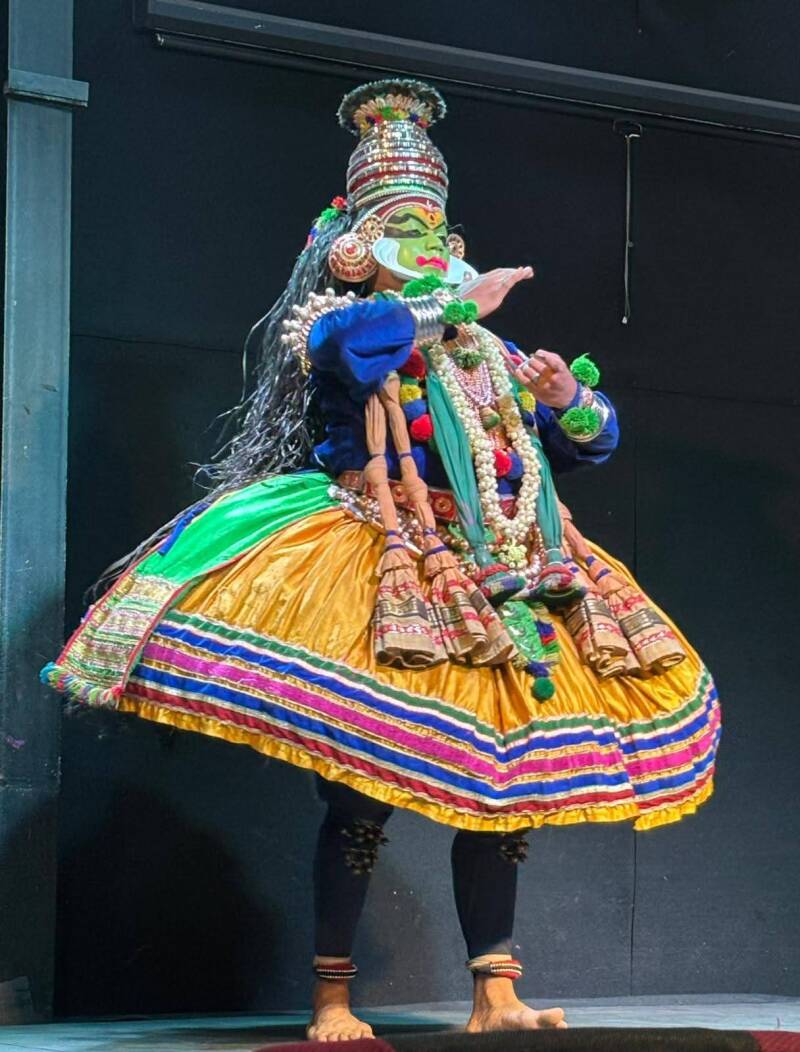
In Munar, we will have the opportunity to visit a tremendous tradition dance where actors follow religious Hindu stories.
At Camp Mumur we have arranged cooking demonstrations during our off time and a visit to the local fruit farm or the tea factory.
The Thamel district of Katmandu is well worth an extra day at the end of the tour. The winding streets are full of small shops and temples and eating places.
Health and safety
This tour travels to extremely safe areas. You will always be with one of the tour leaders but it is perfectly possible to visit a market or temple to have an authentic experience on your own.
It is hard to shake off the bad reputation India has for health concerns. This might have been true 10 or 20 years ago, but is no longer true. We visit tried and tested restaurants where filtered water is used to wash the food. We are in the dry season so water born diseases are rare. There is no malaria.
The most frequent ailment I see is the common cold. Delhi can have bad pollution in the winter months but is not so prevalent in the spring ... still, a face mask is advised and some cough drops for the evening we are there. A few people from each tour will get mild stomach issues. This is likely due to the change in diet rather than a more serious infection. Still, it is advisable to bring anti diarrhea medicine and have a prescription for an antibiotic like Cipro or z-pac.
When on safari in Chitwan, no one is allowed to leave the vehicle except at a designated area for a bathroom break. This is for your safety. We follow the instructions of our local guide and will hopefully see tigers/ elephants.
Hotels and food
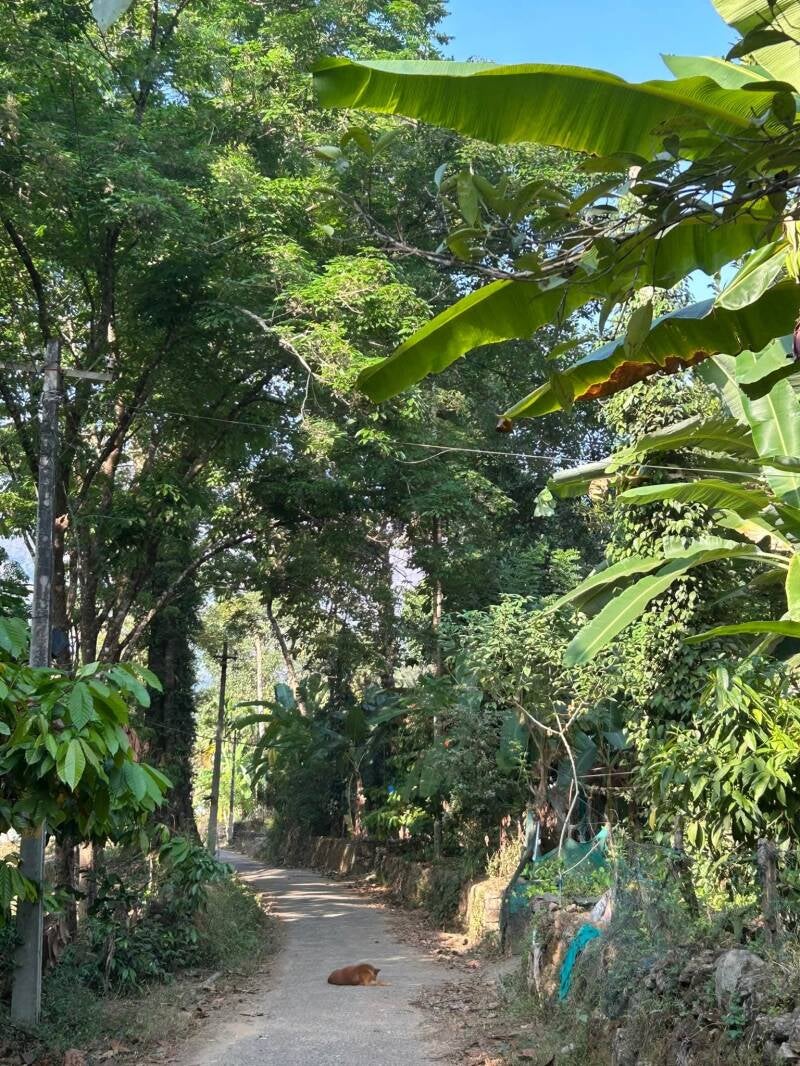
All hotels have AC and attached western toilet.
Kochi - Nihara resort https://www.nihararesort.com/
Thatekkad - Murmur camp https://www.birdsmurmurcampthattekad.in/home.php
Munnar - Copper castle https://www.abadhotels.com/copper-castle-resort-munnar/
Coimbatore
Ooty
Masinagudi - The Nest Inn https://thenestinn.in/
Kathmandu - Kathmandu Eco Hotel and similar hotels.
Nawalpur - Tharu Community Lodge and similar hotels
Sauraha - View Jungle Camp and similar hotels.
Weather and clothing
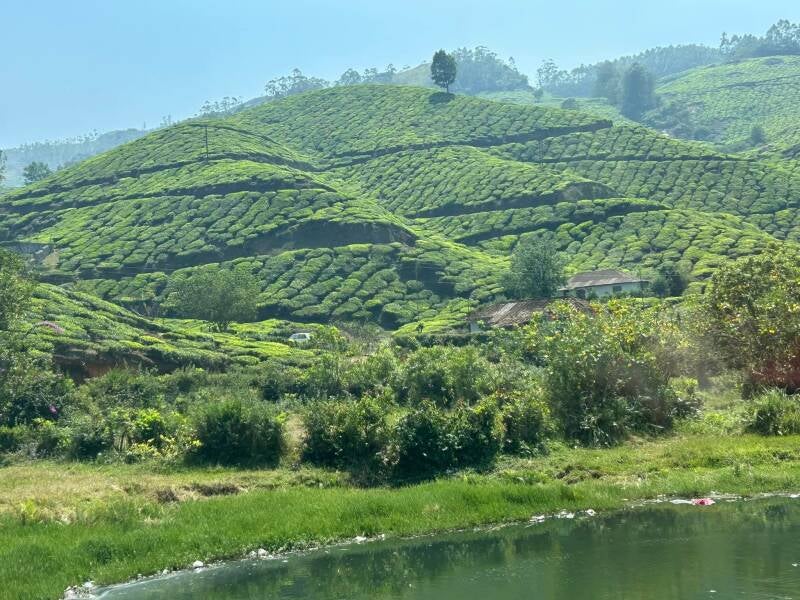
We experience winter in the south of India so temperatures are in the 80s and humid at lower elevation. At higher elevations you will need a jacket in the mornings and Tamil Nadu is a little dryer and less humid. It is possible to get a little rain in the southern mountains but it is so changeble from year to year.
Nepal will be very present in the day time and cool at night. Certainly it can get chilly first thing in the mornings at high elevation. We are not in the monsoons so we don't expect much rain.
I typically carry comfortable hiking shoes, a light weight puffy fir the higher elevations, a sun hat, a light weight rain coat and an umbrella.
Travel
Fly into kochi (also known as Cochin) International Airport (COK). There are many options from the US. No matter what, it is a long trip and with the time difference it will seem like almost two days, although on the return journey you will arrive on the same day you depart. We will arrange pickup from the airport at any time, even if it is 2am.
Fly out of Katmandu International airport (KTM, Tribhuvan International Airport)
India requires that you obtain a visa in advance. On signing up for the tour I will provide all the information you need but a month long tourist eVisa is a relatively painless application online and costs about $35 USD. It can only be applied for, no sooner than, one month before your arrival date.
Nepal does require a visa. It is far easier and timely to obtain this in advance through a quick online process. I will provide the information needed.
Internal security at the airports is very strict and I will provide information on electronics in carry on luggage and all the documents you require.
Other
You will need a travel adaptor to be able to charge your electrics in India
The Indian Rupee is the local currency and it is advisable to use the ATM at the Kochi airport to get money out. You can take out 10,000 IRP at one time but can repeat this again
The Napali rupee is the currency in Nepal and you can easily change money at the airport.
Although hotels will have wi-fi most people will purchase an eSim for the two countries prior to travelling.
Bird resources
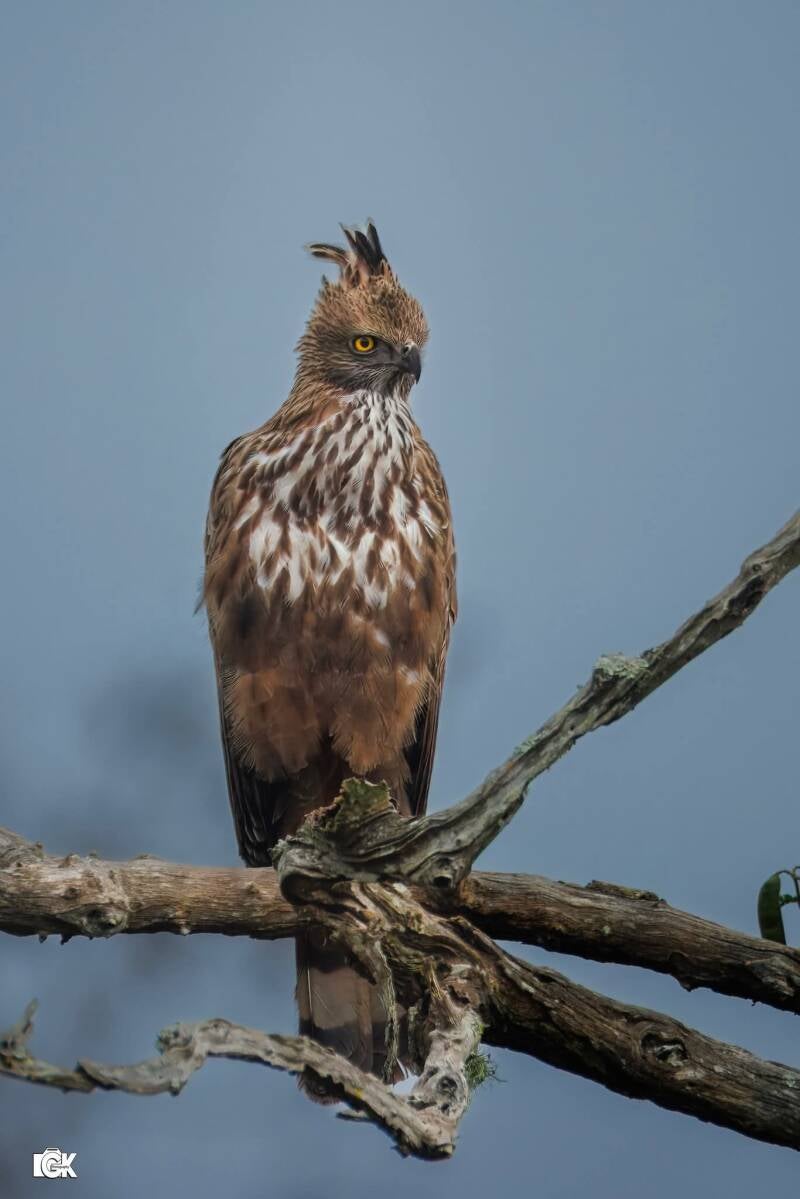
I will manage the ebird check lists and trip report for the trip
The main book is: Birds of India .. 3rd E by Richard Grimmett et al.
Itinerary
Trip reports:
South
https://ebird.org/tripreport/529838?welcome=true
https://ebird.org/tripreport/319682
https://ebird.org/tripreport/101141
Chitwan:
https://ebird.org/tripreport/202769
I dont have a trip repirt for Katmandu or the Vulture Restaurant
Day 1 kochi to Thakkeddad.
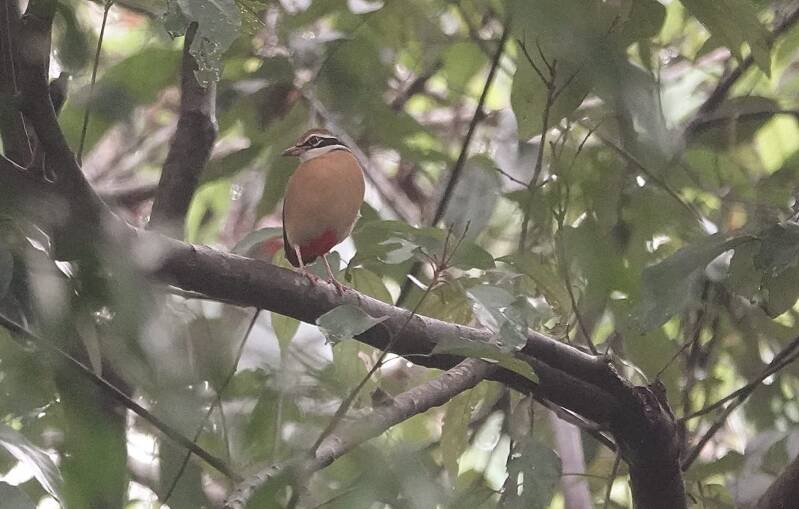
Most people arrive a day early and we can bird on the coast where there is a nice assortment of asian shorebirds, terns, herons and fun species like Indian pitta. Its a 3-4 hour drive to the lower slopes of the Western Ghats which we will do after lunch. There will be time for a late afternoon birding session
Day 2 and 3 Thakkeddad
This is a key endemic hotspit in the forested lower slopes of the Western Ghats
Day 4 drive to Munar
With an early morning drivebof 3 hours we will rise in elevation to 5000ft and a host of other endemic birds.
Day 5 Munar
Day 6 drive to Coimbatore
We pass through some rocky scrub forest for key species. This is a 6 hour drive with stops.
Day 7 drive to Ooty
Back up into the highlands and more endemics after a 4 hour drive.
Day 8 drive to Massinagudi
A drivevthrough a tiger preserve will take us down to the dry lowlands in the rain shadow of the western ghats. . After a few hours in Ooty we will leave after breakfast and have an afternoon birding session in Massinagurdi.
Day 9 and 10 Massinagudi
Dry shrub, wetlands and tall forest comprise fantastic birding with short drives.
Day 11 drive to Coimbatore in pm.
In the afternoon we will drive back to Coimbatore to stage for our flight tomorrow.
Day 12 fly to Kathmandu via Delhi to arrive in the late afternoon.
Day 13 – Drive to Nawalpur (Chitwan National Park – West Sector)
After breakfast, we begin our scenic drive to Nawalpur District, located in the western sector of Chitwan National Park (approximately 190 km / 6 hours depending on traffic conditions).During the journey along the Trishuli River, we will have excellent opportunities to search for the highly sought-after Ibisbill, Nepal’s endemic Spiny Babbler, and various wintering bird species. Lunch will be taken en route.If time permits and we arrive early at the hotel, we will enjoy additional birding in nearby farmlands and surrounding habitats.Overnight stay in Nawalpur.
Day 14 – Community Forest Birding, Vulture Restaurant Visit & Drive to Sauraha
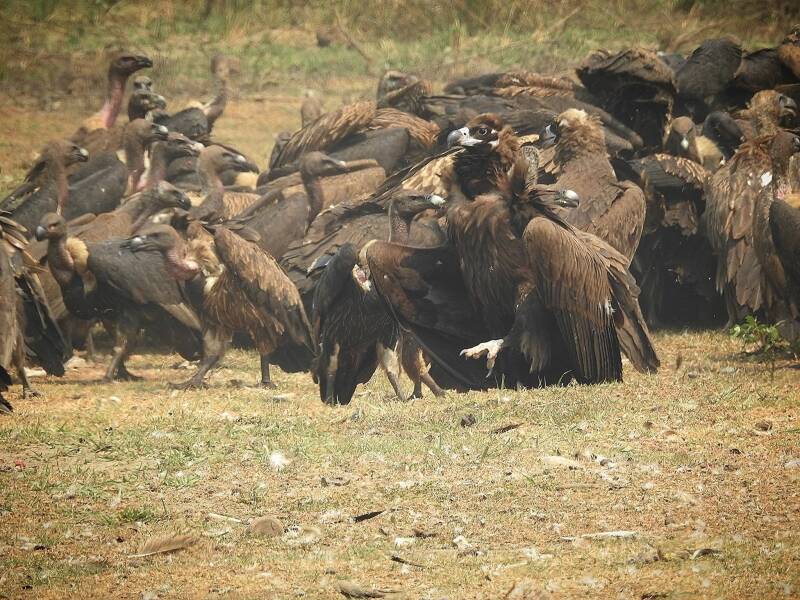
After breakfast, we visit a nearby community forest and the famous Vulture Restaurant.The Vulture Restaurant is the world’s first community-managed vulture feeding site, established to support the conservation of endangered vulture species by providing safe, uncontaminated food sources.We may observe up to eight species of vultures, including:
White-rumped Vulture
Slender-billed Vulture
Indian Vulture
Red-headed Vulture
Griffon Vulture
Himalayan Vulture
Egyptian Vulture
Cinereous Vulture
Other possible sightings include Rosy Minivet, Rufous-necked Laughingthrush, Greater Goldenback, Himalayan Goldenback, Yellow-eyed Babbler, Brown Fish Owl, Grey-headed Fish Eagle, and many more.Mammals including Bengal Tiger,One-horned Rhino,Spotted Deer,Hog Deer.Two species of crocodiles Marsh Mugger and Endangered Gharial.After lunch, we drive approximately 1.5 hours to Sauraha in the eastern sector of Chitwan National Park.
Following hotel check-in, we enjoy birding in nearby farmlands along the park boundary. Species here may include Yellow-breasted Bunting, Crested Bunting, Bengal Bushlark, Asian Woolly-necked Stork, Lesser Adjutant, Asian Openbill, Red-naped Ibis, and many other wetland and grassland birds. Overnight stay in Sauraha.
Day 15 – Full-Day Jeep Safari in Chitwan National Park
Today we enjoy a full-day jeep safari inside Chitwan National Park with packed lunch.Established in 1973, Chitwan National Park is Nepal’s first national park and a UNESCO World Heritage Site. The park is home to 68 mammal species, including the endangered One-horned Rhinoceros, Bengal Tiger, Common Leopard, Sloth Bear, Asian Elephant, Gaur (Indian Bison), Sambar Deer, Spotted Deer, Hog Deer, and Barking Deer. The park also supports two crocodile species: the Marsh Mugger and the endangered Gharial.Recognized by BirdLife International as an Important Bird Area (IBA), Chitwan is one of Nepal’s finest birdwatching destinations, with more than 600 recorded bird species.During our safari, we will search for species such as:
Great Hornbill
Great Slaty Woodpecker
Greater Flameback
Red-headed Trogon
White-browed Scimitar Babbler
Greater Necklaced Laughingthrush
Lesser Necklaced Laughingthrush
Large Woodshrike
Yellow-bellied Warbler
White-throated Bulbul
Red-breasted Parakeet
Blossom-headed Parakeet
Grey-headed Fish Eagle
Slender-billed Babbler
Gray-crowned Prinia
…and many more species of birds and wildlife. Overnight stay in Sauraha.
Day 16 We visit Divyanagar farmlands with a packed lunch box. Divyanagar is located about a one-hour drive from our hotel in Sauraha, passing through the local town area. It is one of Nepal’s underrated birding hotspots, especially during the winter migration season. The extensive paddy fields, wetlands, irrigation canals, and open grassland habitats attract a wide variety of resident and migratory birds. Highlights of birding in Divyanagar include:
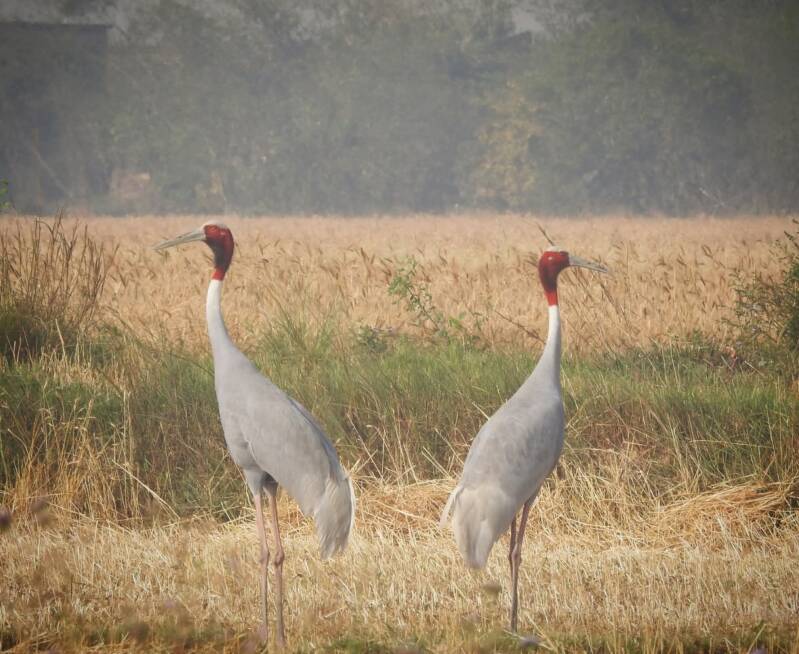
Wintering flocks of Common Crane and Ducks
Open-country raptors
Larks, pipits, wagtails, and buntings
Wetland birds around canals and flooded fields
Seasonal migratory birds
Day 17. Drive back to Katmandu to arrive in late afternoon. We can easily arrange hotel accommodation for you.
Create Your Own Website With Webador